Things to Do in Yaounde in February
February weather, activities, events & insider tips
Low Season · Budget Friendly
February Weather in Yaounde
Long-run averages for February
87°F (31°C)
High Temp
68°F (20°C)
Low Temp
1.7 inches (43 mm)
Rainfall
72%
Humidity
11
Sunny-Day UV
⚠ Yaounde sits near the equator. February sun hits hard. UV intensity stays extreme even when temperatures feel mild. Skip the midday hours. Prolonged exposure between 10 AM and 3 PM burns skin within an hour without proper coverage. Heatstroke threatens visitors unaccustomed to equatorial conditions. Pack a wide-brimmed hat. Bring long sleeves. Reapply sunscreen often.
⚠ Malaria never sleeps in Yaounde. Transmission continues year-round, dry season included. Take antimalarial prophylaxis. Use DEET-based repellent. Sleep under treated nets. These precautions matter every month. No exceptions.
Is February Right for You?
Weigh the advantages and considerations before booking
Advantages
- + February sits in Yaounde's dry window. Only 43 mm (1.7 inches) of rainfall falls, against September's 231 mm (9.1 inches). The city's steep laterite roads stay firm and walkable. They do not turn into slick red mud. That mud swallows shoes and stalls taxis from March onward.
- + Boulevard du 20 Mai floods with marching bands and bikutsi dance troupes. The street energy gives first-time visitors a concentrated window into Cameroonian civic life. You cannot stage this. It is unselfconscious and real.
- + Humidity hits 72 percent. This beats the 89 percent of peak wet season. Morning walks across Yaounde's seven hills feel invigorating. Sight lines clear from Mont Febe across the forested plateau to the south.
- + Dry-season roads open access beyond the city. Mefou Primate Sanctuary and the Nyong River at Ebogo become reachable. Unpaved roads turn impassable by mid-April. In February, they hold solid ground.
Considerations
- − Late February afternoons build punishing heat. Minimal cloud cover pushes past 31°C (87°F) by early afternoon. Exposed concrete in commercial districts like the Mokolo Market corridor holds warmth into evening. Plan outdoor walking for mornings. Otherwise you will drain fast.
- − Yaounde's tourism infrastructure stays thin. East African capitals offer more. Expect limited English-language signage and few organised tour desks. Self-reliance rewards those who speak market-level French. Others must improvise without a guidebook.
- − February lands just before mango and avocado season peaks. That peak hits March and April. Fruit stalls at Mokolo and Marche Central still carry stock. You miss the absurd overflow of late March. Then Yaounde's markets become a tropical produce spectacle.
Best Activities in February
Top things to do during your visit
Yaounde in February sits at the hinge between dry season and the first rains. Daytime temperatures climb to around 87°F (31°C), the highest the city sees all year, and the laterite roads through the seven hills radiate a baked, mineral warmth well into the evening. Nights cool to a comfortable 68°F (20°C), enough to sleep without air conditioning if your windows catch the cross-breeze that rolls down from Mont Fébé after dark. Rainfall is still modest, roughly 1.7 inches for the entire month, so the red-earth trails threading through the surrounding forest stay firm underfoot, and the city's outdoor restaurants keep their terraces open without the tarps that go up by April. This is the month when Yaounde feels most walkable. The harmattan haze that drifts south from the Sahel in December and January has largely cleared, sharpening the view from the hilltops across the city's corrugated rooflines and church spires toward the Sanaga basin. Neighborhoods like Bastos and Nlongkak smell of roasting plantain and ndolé simmering in palm oil, the leaf stew that is the national dish and a daily fixture at the open-air eateries clustered around Marché Mokolo. February's dry warmth coaxes the frangipanis into heavy bloom along Boulevard du 20 Mai, and the evening air carries their sweetness mixed with charcoal smoke from the grilled fish vendors who set up along Rue Joseph Mballa Eloumden as the sun drops. For anyone mapping hiking trails near Yaounde, February is the window before the wet season transforms forest paths into slick, leech-heavy corridors. The trails on Mont Fébé and Mont Messa, the twin green hills that bracket the city center, are dry enough to climb in sneakers, and the canopy is thinner, letting equatorial light filter through to the forest floor. The city's food scene rewards exploration on foot: smoky soya (skewered beef rubbed in ground peanut and dried pepper) sold from roadside grills, the sharp tang of fermented cassava in bâton de manioc, and cold bottles of Top or Castel poured at open-air bars where conversation drowns out the moto-taxi horns. Yaounde at night concentrates around the Quartier du Lac and Bastos, where live-music bars pulse with makossa basslines and bikutsi rhythms until the early hours, and the air inside is thick with the warmth of a packed room. Safety in Yaounde follows common urban sense: stick to well-lit areas after dark, use known taxi drivers or app-based rides, and keep valuables close in crowded markets.

Visit the Ebogo site and Méfou Park from Yaoundé
otherThe Ebogo site and Méfou Park form a paired excursion that drops visitors from Yaounde's urban heat into two radically different pockets of forest within a single day. Méfou National Park, a primate sanctuary about an hour south of the city center, shelters rescued gorillas, chimpanzees, and mandrills in semi-wild enclosures beneath a canopy so dense the air cools ten degrees the moment you step off the road, the musty, green smell of decomposing leaves and damp bark replacing the city's diesel-and-dust signature. At the Ebogo eco-tourism site along the Nyong River, pirogues glide beneath overhanging branches where malachite kingfishers flash electric blue and the river's surface reflects the forest in a dark mirror broken only by your paddle stroke.
One of the few places near a Central African capital where rescued great apes live in natural forest and a river canoe ride puts you inside undisturbed riparian jungle on the same outing.
Insider tip: Request the earliest departure time available. The primates at Méfou are most active and vocal in the first hours after dawn, and the Nyong River at Ebogo is glassily still before the midday breeze picks up.
This month: February's low rainfall keeps the Nyong River at a navigable but calm level and the forest trails around Méfou firm and dry, unlike the muddy conditions that set in from March onward.

Yaoundé City Tour
guided_experienceA guided circuit through Yaounde reveals a city that sprawls across its seven hills with a logic that only a local narrator can decode. The route typically threads from the Musée National, housed in the former presidential palace, where carved Bamoun thrones and Bamileke beadwork glow under low light, through the Monument de la Réunification, a concrete spiral on a hilltop whose shadow stretches long in the late-afternoon sun and whose terrace has a panorama across the entire urban basin. The Cathédrale Notre-Dame des Victoires rises in pale concrete near the city center, its interior cool and echoing, the stained glass casting colored geometry across the stone floor even at midday. Between landmarks, a good guide will detour through the tight lanes of Marché Central, where the humid press of bodies, the clatter of tin bowls, and the sharp scent of smoked fish stacked in pyramids give a sensory compression of Yaounde's daily commerce.
The only efficient way to link the city's scattered landmarks, markets, and viewpoints into a coherent narrative that connects Cameroon's colonial past to its present without wasting hours navigating Yaounde's chaotic traffic independently.
Insider tip: Ask your guide to include a stop at the Quartier du Lac neighborhood for a mid-tour ndolé lunch at one of the local restaurants. It breaks the day and gives you the city's signature dish in the district where locals eat it.

The Dja Biodiversity Reserve Safari 7Days/ 6 Nights
otherThe Dja Biodiversity Reserve, a UNESCO World Heritage site wrapping around a near-perfect loop of the Dja River in southeastern Cameroon, is one of the largest and least-disturbed tracts of rainforest on the continent. A week-long safari from Yaounde covers the overland journey to the reserve's edge and then days inside a forest where western lowland gorillas move through the understory, forest elephants leave dinner-plate footprints in the mud, and the air is a constant humid weight scented with rotting fruit and flowering lianas. Night sounds are overwhelming, a wall of insect drone punctuated by the distant, chest-deep calls of great apes settling into their nests. The Dja's canopy is so continuous that sunlight reaches the ground only where a fallen giant has torn a gap, and those clearings fill with butterflies so dense they rise from the path in clouds of yellow and iridescent blue.
Access to one of Central Africa's most intact rainforest ecosystems with confirmed populations of western lowland gorillas, forest elephants, and over 100 fish species found nowhere else, all reachable as a round trip from Yaounde.
Insider tip: Pack waterproof bags for all electronics and clothing. Even in February, river crossings and morning dew inside the forest soak everything, and there is no opportunity to dry gear once you are inside the reserve.
This month: February falls in the Dja region's drier window, meaning river levels are lower and forest trails are passable on foot rather than knee-deep in mud, conditions that shift dramatically once the heavy rains arrive in March.
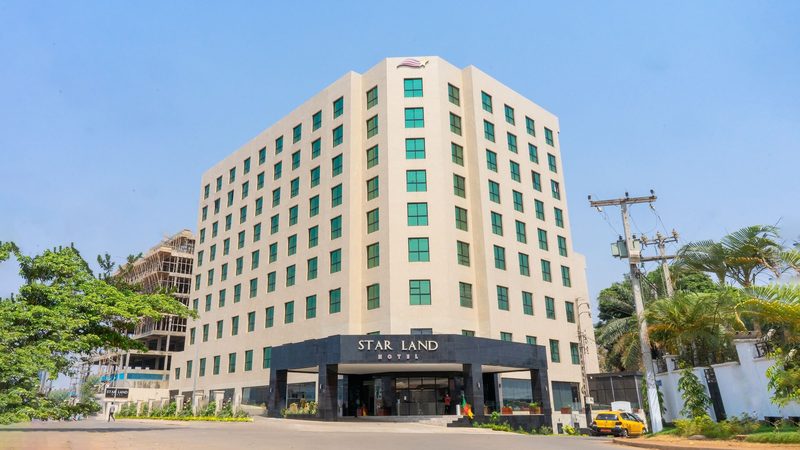
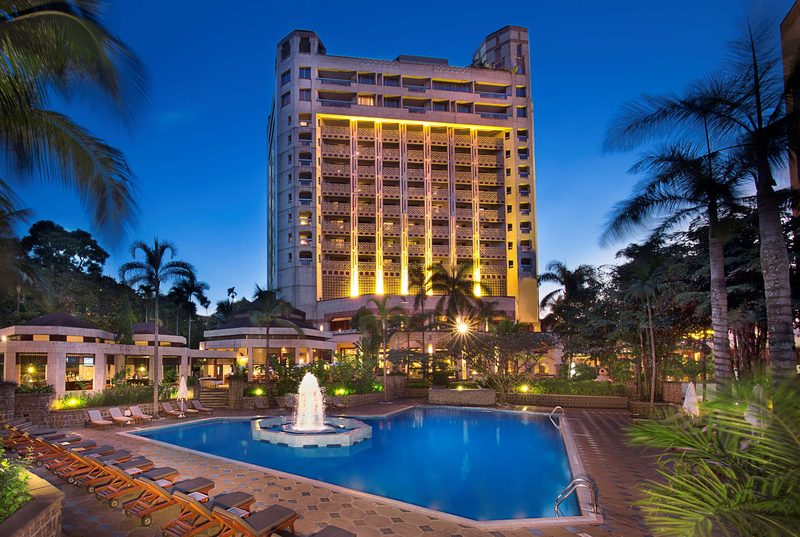
Where to Stay in Yaounde in February
Hand-picked hotels across price tiers for February travellers.
Public Holidays in February
Dates that affect opening hours, transport and crowds
Youth Day
Observed nationwide as a public holiday.
Youth Day
Observed nationwide as a public holiday.
Packing Checklist
Bookmark this page — your progress is saved between visits
Need the full list with shopping links?
Climate-specific gear, brand recommendations, and what to leave at home.
View Yaounde Packing List →Essential Tips
Insider knowledge and common pitfalls to avoid
Insider Knowledge
Yaounde is overwhelmingly Francophone despite Cameroon's official bilingualism, and this catches more visitors off guard than anything else. Even basic French, greetings, numbers, directions, taxi negotiations, transforms every interaction. Drivers, market vendors, and restaurant staff will meet you halfway if you make an effort. But English alone leaves you relying on hand gestures across most of the city outside the diplomatic Bastos enclave. A pocket phrasebook or translation app is not optional here. It is your most important tool.
Safety in Yaounde follows standard urban logic more than any exotic threat model. Petty crime exists, phone snatching in crowded markets like Mokolo being the most common. But violent crime against visitors is rare. Walk with confidence, keep electronics out of sight in dense crowds, negotiate taxi fares before sitting down. The absence of meters is not a scam. It is simply the system. Avoid poorly lit streets alone after dark. The city is meaningfully safer than its regional reputation suggests, though the ongoing tensions in the Northwest and Southwest regions mean those areas remain entirely off-limits for travellers.
Yaounde's nightlife runs on a clock that takes adjustment. Live music venues around Carrefour Nlongkak and through the Nlongkak neighbourhood rarely fill before 11 PM, and the best bikutsi and makossa performances, electric guitar riffing over layered polyrhythmic percussion in a way that makes standing still feel wrong, tend to peak between midnight and 2 AM. February's dry weather means the outdoor terraces and courtyard bars that define the scene are all open and comfortable, the warm air carrying bass notes half a block in every direction. Thursday through Saturday nights are the window for live music worth seeking out.
Shared taxis threading Yaounde's traffic follow fixed colour-coded routes and are the most practical way to move between neighbourhoods. But the system is invisible until someone explains it. Ask your accommodation host to sketch the main lines and the going fare structure before your first ride. Motorcycle taxis, locally called benskin, are faster through congestion but carry real risk. Helmets for passengers are uncommon despite being technically mandatory, and the driving is aggressive in a way that takes getting used to even if you are watching from a car window.
Avoid These Mistakes
Scheduling full days of outdoor walking through exposed areas between 11 AM and 3 PM, when February sun turns Yaounde's concrete corridors and treeless market zones into heat traps that sap energy fast. The smart approach: walk mornings and evenings, retreat to air-conditioned restaurants or shaded terraces through the midday hours, and save the heavy sightseeing for the golden-light window before sunset.
Assuming Yaounde operates on rigid Western punctuality. Meetings, tours, restaurant service, and social gatherings move on their own schedule, and visible impatience reads as both ineffective and culturally tone-deaf. Build generous slack into every plan. Carry something to read. Reframe the waiting as the city's actual rhythm rather than a malfunction you need to fix.
Skipping malaria prophylaxis because February is the dry season. Mosquito populations thin compared to the wet months but do not disappear, and the transmission risk in Yaounde is year-round. Antimalarials, DEET repellent, and sleeping under a treated net if your accommodation provides one are non-negotiable precautions regardless of the calendar.
Ready to plan your trip to Yaounde?
Now that you've got the research covered, here's where to go next.
Explore More Activities in Yaounde
Didn't see anything interesting yet?
Browse Viator's full catalog of tours, day trips, food experiences, and private guides in Yaounde.
See All Yaounde Tours on Viator